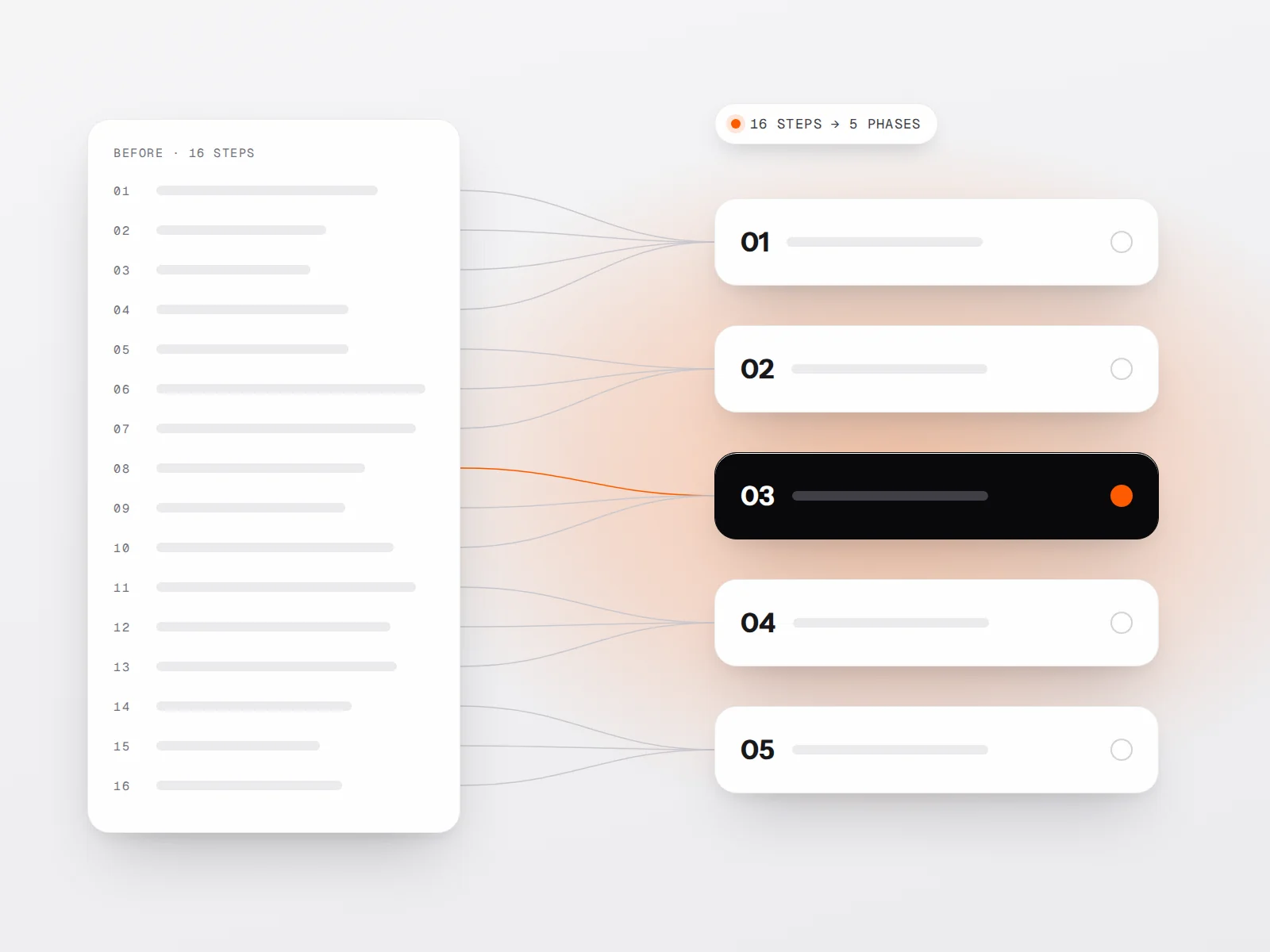
A 16-step farm workflow, restructured into 5 guided phases.
The redesign wasn't in the brief. Auditing the UI, I found the flow mirrored the database, not the task. I proposed a task-based sequence, kept every business rule intact, and the team backed it.
- Role
- UX/UI designer
- Team
- 2 mobile, 2 web, 2 QC
- Timeline
- 2023, ~3 months
- Platform
- Mobile-first, field use
- Status
- Launched
The workflow broke operations, not the visuals.
Field workers entered data on phones, outdoors, through a flow built around the system instead of the job.
- 0116 disconnected stepsOne routine farming task, split into pieces, caused delays in data entry.
- 02High load in the fieldOutdoor glare and one-handed use on mobile made every extra step cost more.
- 03Business rules could not changeEvery backend validation rule had to be kept exactly as it was.
- 04Validated through the teamDiscovery ran on a full system audit and walkthroughs with PM, QC and engineering.
It wasn't in the brief. I proposed it.
I was handed the existing UI to polish. The audit showed the real problem was structure, so I made the case for restructuring.
- 01System auditMapped all 16 legacy steps to find where the structure, not the styling, was costing time.
- 02Made the case internallyBrought the proposal to the PM and the team, with business rules kept intact as a hard constraint.
- 03Pressure-tested with engineeringChecked low-fidelity flows with the mobile and web devs for feasibility before handoff.
Four calls for the field.
Task-based architecture
16 fragmented inputs caused confusion and skipped steps.
Put the 5-phase model in front of real operators earlier.
The model held up in internal walkthroughs with PM, QC and engineering. Next time I would validate it with the people doing the work in the field, before handoff rather than after.
- Flow dictates formPolish is irrelevant if the underlying workflow is flawed.
- Constraints drive clarityStrict backend rules forced a leaner experience.
- Systems scaleReusable patterns outlast isolated screen fixes.
Restructure the flow, keep the rules.
For products where people push through too many steps. I audit the flow and regroup it around the real task, without touching business logic.
Similar work: UX audit, quoted after a short call