An internal tool, redesigned into a SaaS clients can set up themselves.
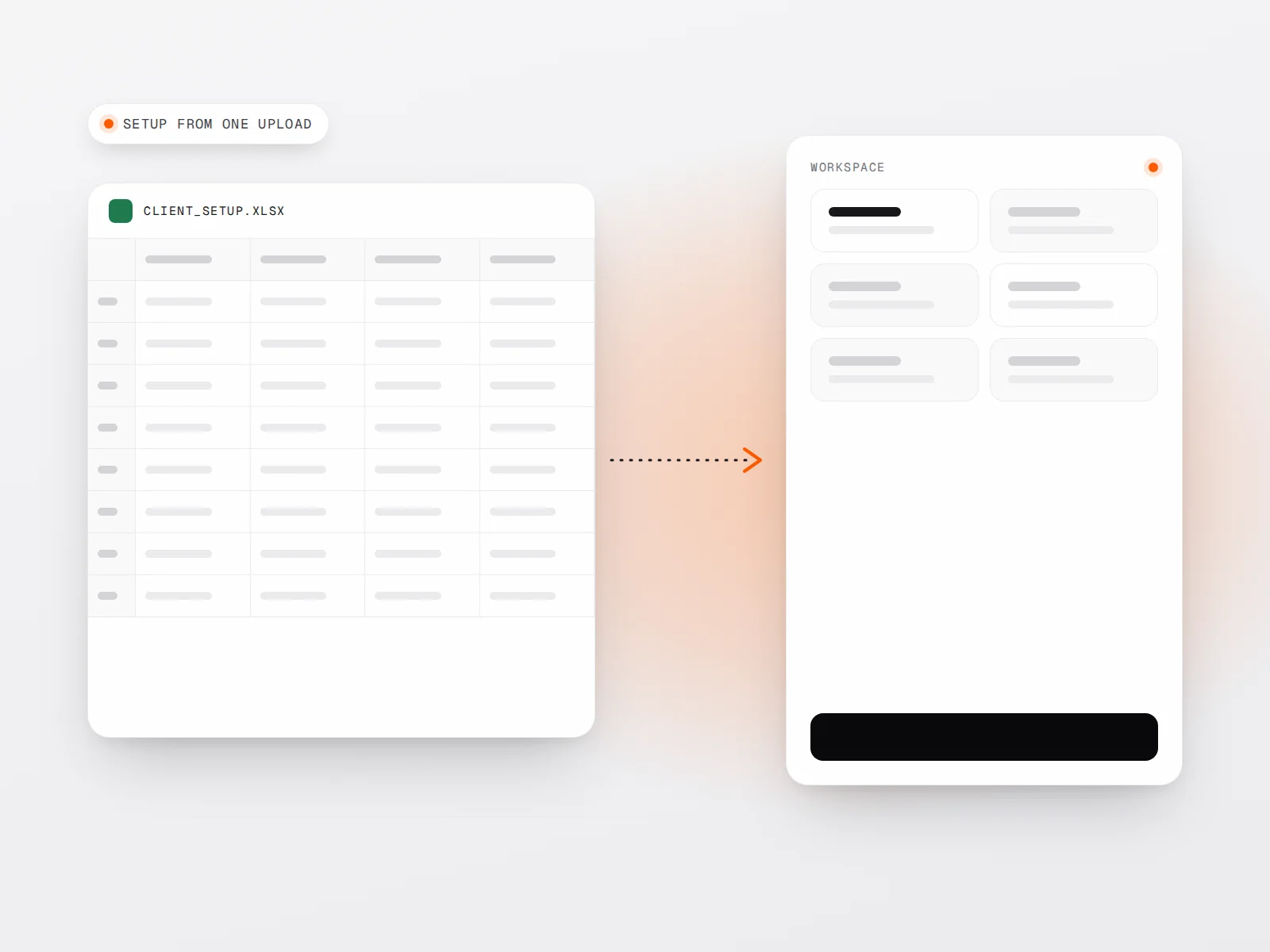
Every new client used to need a developer editing the database by hand. As the sole designer, I redesigned the configuration system, the admin, the onboarding and the landing page, so basic setup now starts from one spreadsheet upload.
- Role
- Sole designer
- Team
- 2 mobile, 1 backend, 2 QC
- Timeline
- 12 months
- Phase
- 0 → 1, first release
- Status
- V1.0 launched
- TriggerNew client signs up
- Hand-offDeveloper picks up the ticket
- Manual workEdits the database by hand
- ResultClient can start, days later
- TriggerNew client signs up
- Self-serveUploads their Excel file
- AutomaticFile maps to data structures
- ResultWorkspace ready, no dev needed
Built for one team. Sold to many.
FeedbackMe started as a tool for one internal environment. When it became a commercial SaaS, every new client's setup landed on the developers. If your product grew the same way, this may sound familiar.
- 01Onboarding eats developer timeEach new client meant a developer changing data structures by hand, instead of building the product.
- 02Clients can't shape it to their workflowThere was no configuration UI. Every client-specific need became a support ticket.
- 03Flexible, but not breakableThe config had to fit very different client structures without breaking the shared infrastructure underneath.
Logic before screens.
A polished onboarding flow is useless if the configuration underneath is broken. So discovery mapped the data first. The PO and CEO owned the what and why; the team and I owned the how.
- 01Logic mappingWent through the legacy tool with the backend dev to decide which fields had to become dynamic, such as regions and locations.
- 02Depth calibrationAgreed with the team how far clients can customise: their regions and locations, plus theme, logo and display labels, without breaking the shared system.
- 03Feasibility syncReviewed the designs with engineering every Thursday, so every layout matched what the backend could actually do.
What made it self-serve.
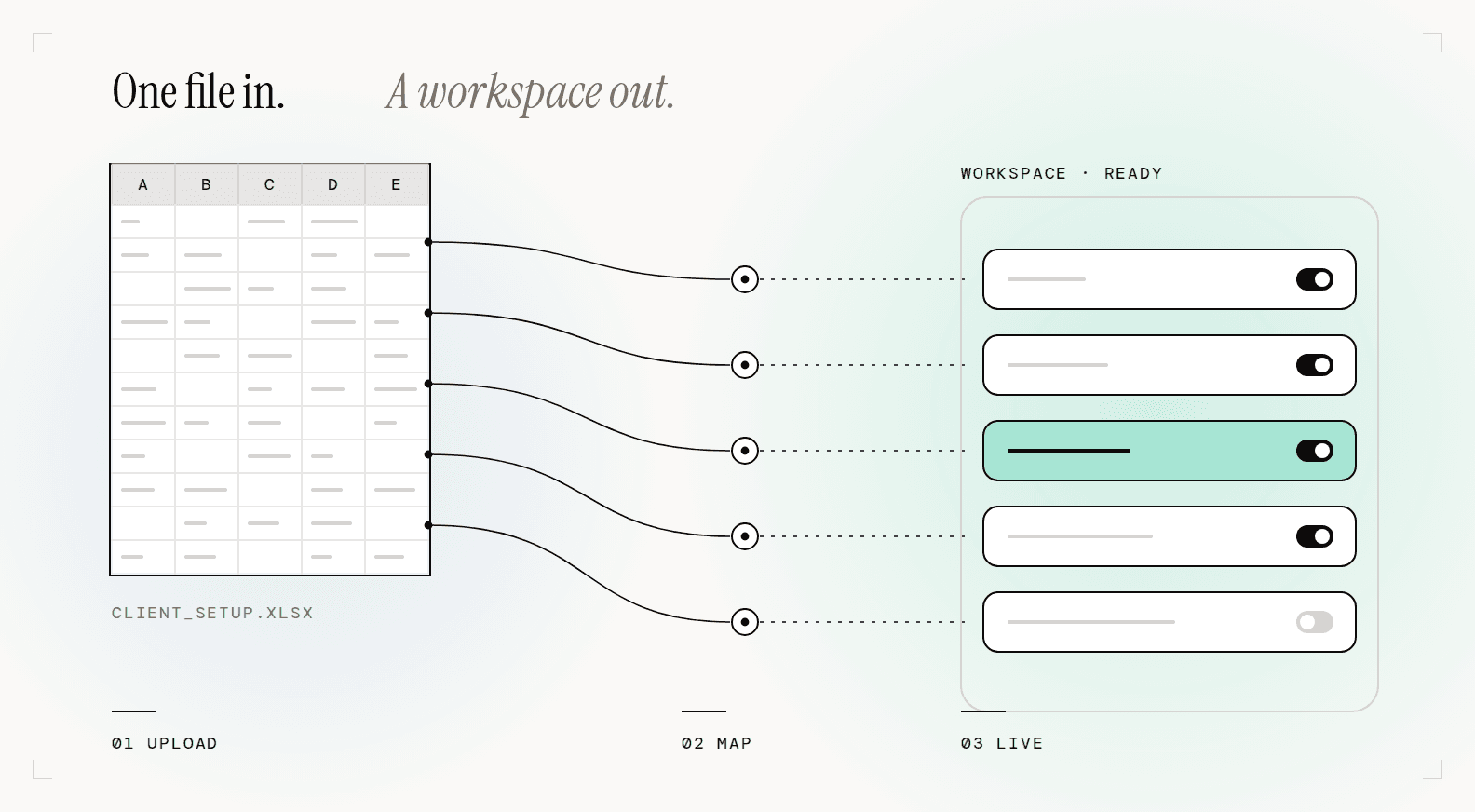
Excel-driven onboarding
Multi-day manual setup blocked new clients from getting started.
Next time, I'd watch a client's first upload before calling it done.
The config logic held up in review with engineering and the PO. On the next 0 → 1, I would add one more check: sit with a client through their first upload, so self-serve is something we have seen, not only reasoned.
- Logic dictates UXThe biggest decisions here were structural, not visual.
- Autonomy is scalabilityEvery routine setup a client does alone frees dev time for the product.
- Guardrails make it usableTotal freedom breaks the experience. Limits are what let it scale.
Start with an audit, not a rebuild.
For live products that are losing users or eating dev time. I audit the full experience, restructure the UI system and fix the gaps without rebuilding everything from scratch.
Similar work: UX audit, quoted after a short call