2023Agri-Tech / SaaS
Aotomatic
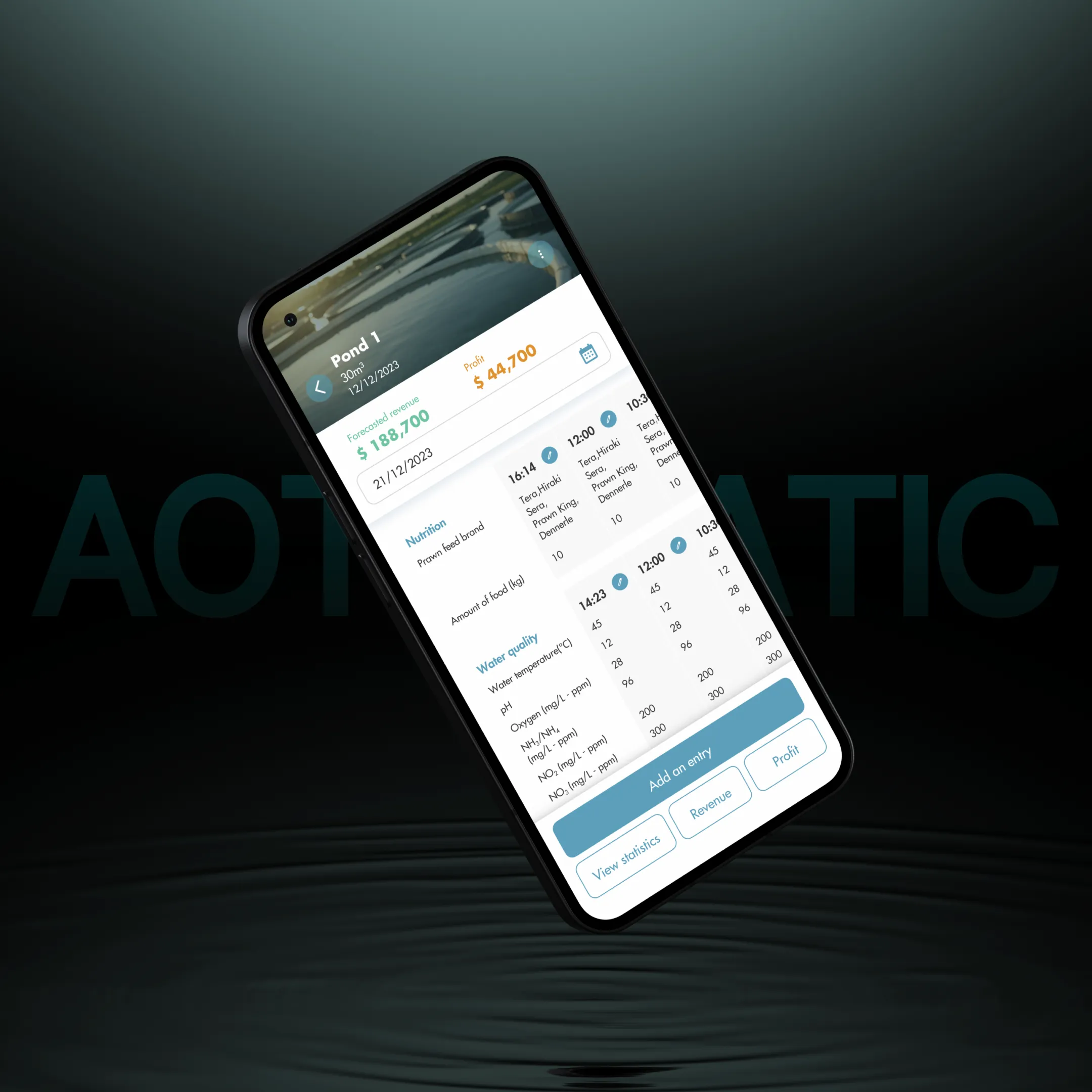
Aquaculture data entry — 16 steps down to 4. Same backend rules. Completely different experience.
- UI/UX Design
I joined this project three years into development, with no room for visual guesswork. My role is to translate dense hardware specs into an operator-facing interface that stays clear, safe, and aligned with machine behavior.
[01]IMPACT & SUMMARY_
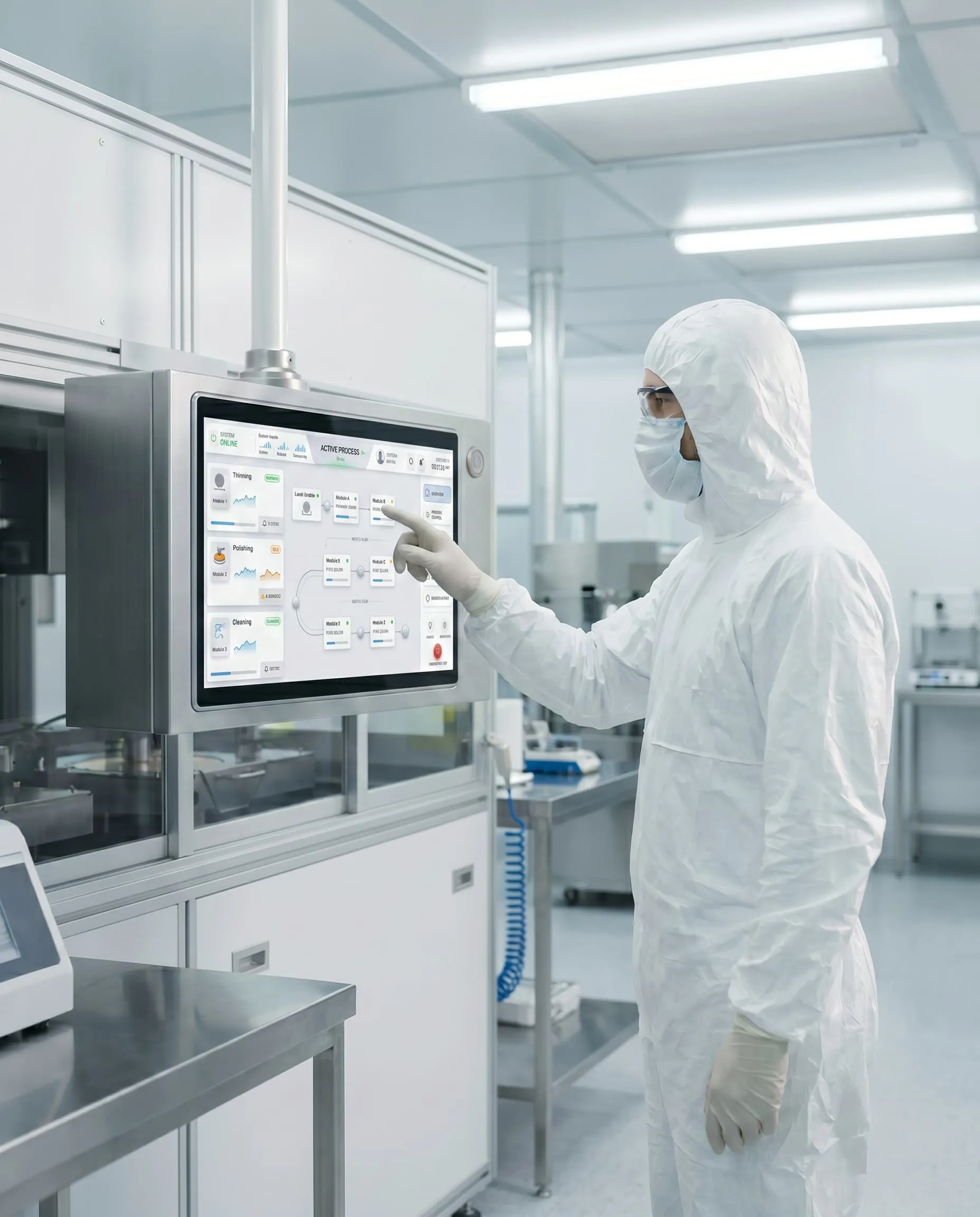
HMI for a wafer grinding machine, designed for gloved operators, strict accuracy, and a zero-error environment.
Project Status
Active Product Designer
Onboarded into a mature, multi-year R&D cycle
Classified visual assets & core hardware IP
Project Status
Active Product Designer
Onboarded into a mature, multi-year R&D cycle
Classified visual assets & core hardware IP
I joined this project three years after it started — with no brief, no UX docs, and a requirement that nothing could be wrong.
I’m working inside a three-vendor software setup for a wafer grinding machine project that was already deep into development when I joined. My role is to turn years of hardware logic and engineering constraints into an interface the frontend teams can build and operators can trust.
Executive Summary
[02]THE PROBLEM_
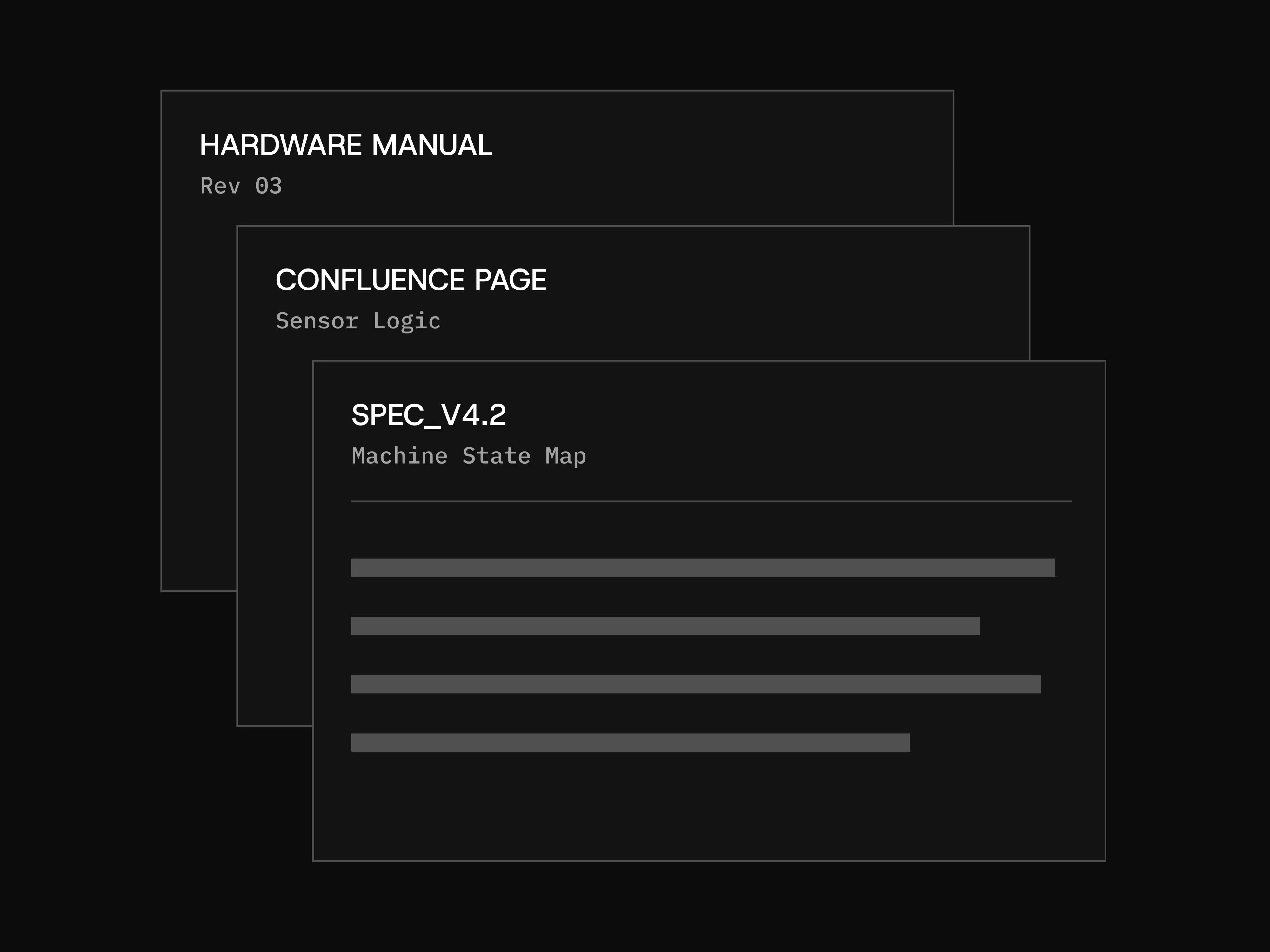
Joining a deep-tech hardware project in its third year meant coming into a machine that already worked, with years of engineering decisions baked in. Instead of a blank canvas, I inherited a dense pile of specs and Confluence pages. A visual mistake here isn’t just an annoyance—it can waste wafers and time on expensive equipment.
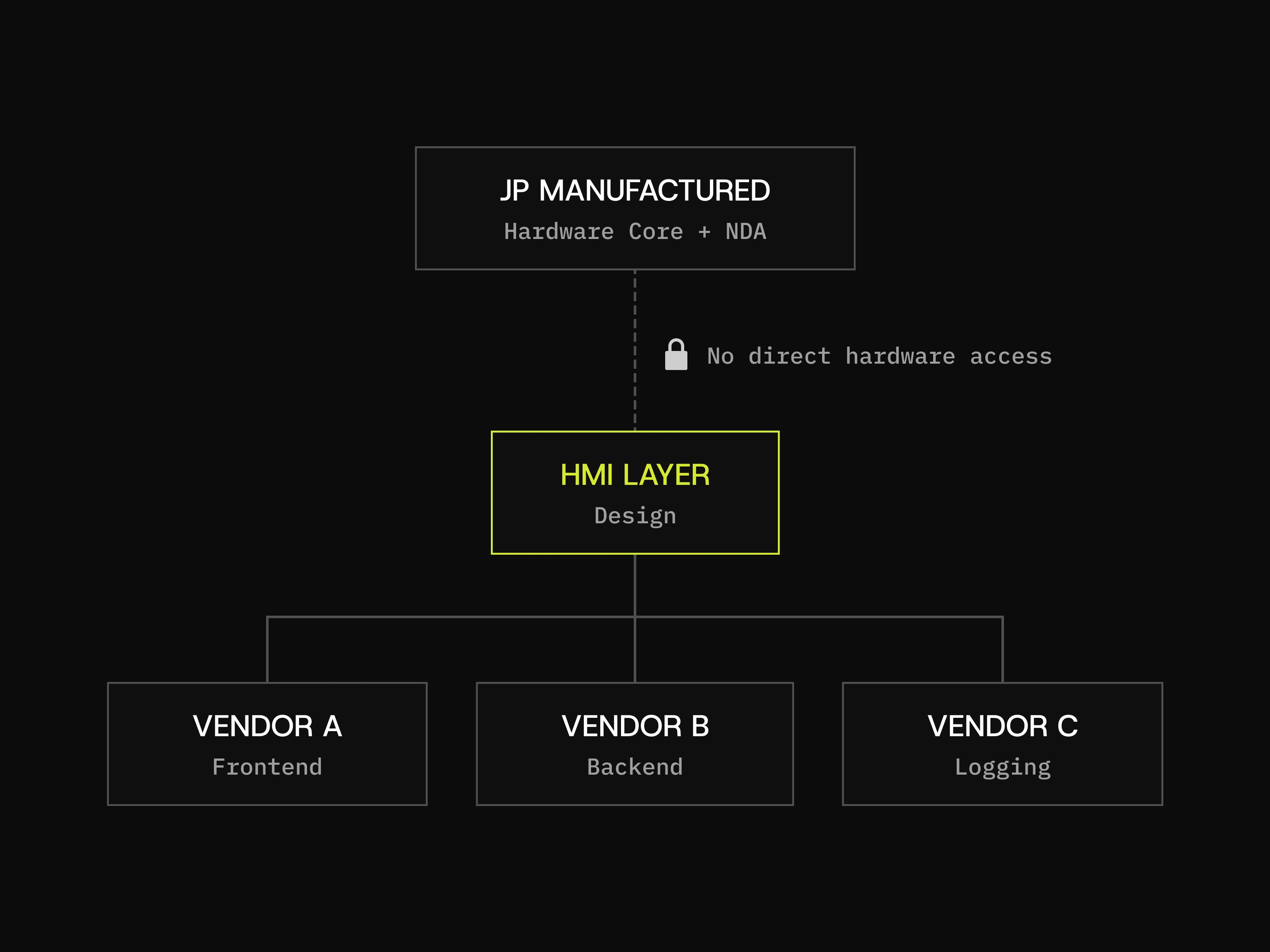
The hardware core is controlled by a Japanese semiconductor manufacturer, while software is split across three Vietnamese vendors under strict NDA. I had to design precise machine state visualizations without ever having direct, open access to the hardware itself.
[03]DISCOVERY & APPROACH_
Under heavy NDA, standard UX research methods are impossible. Discovery meant spending my initial months decrypting years of engineering documents before opening a design tool.
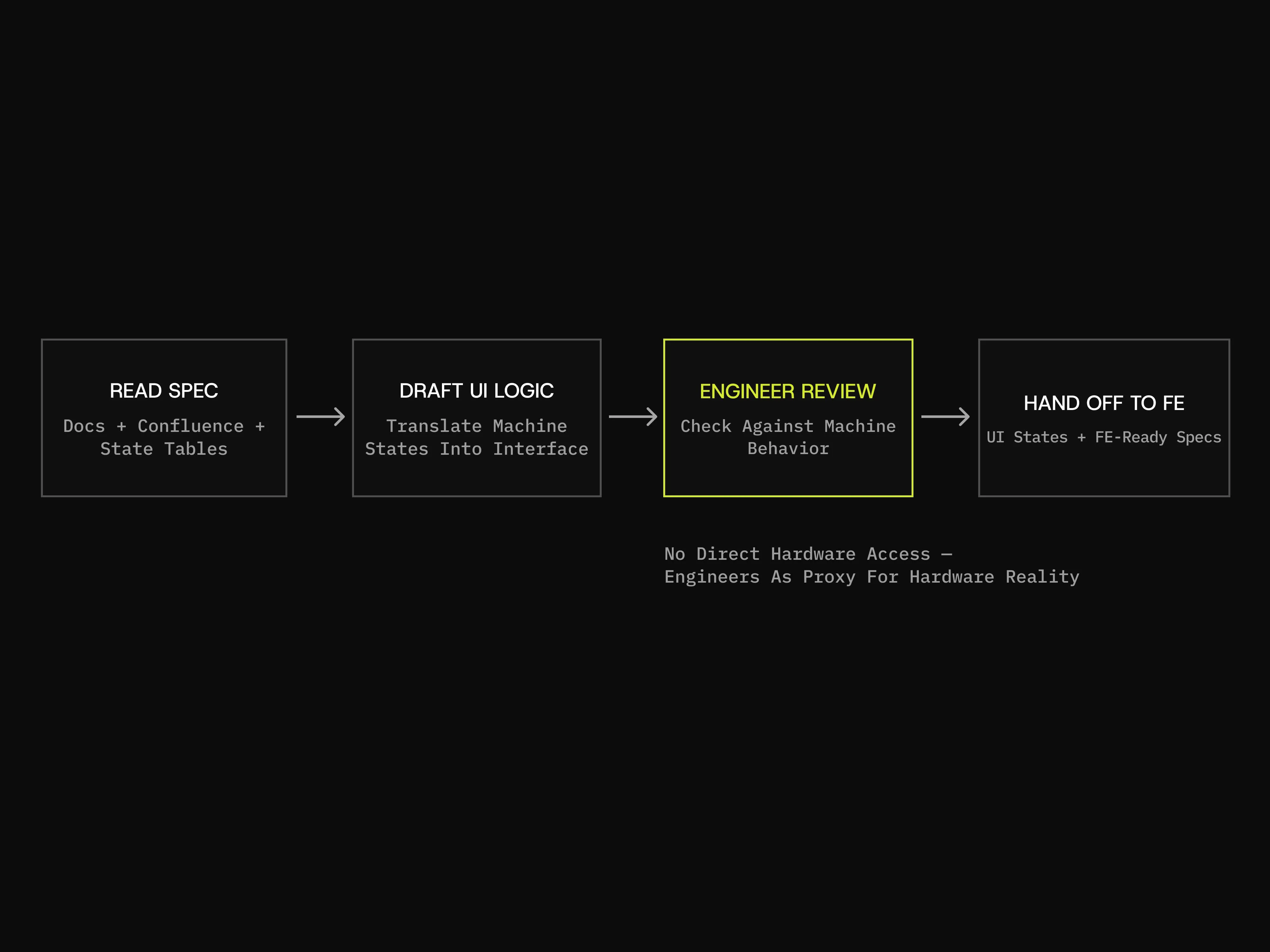
Working from specs, not interviews
[04]Key Design Decisions_
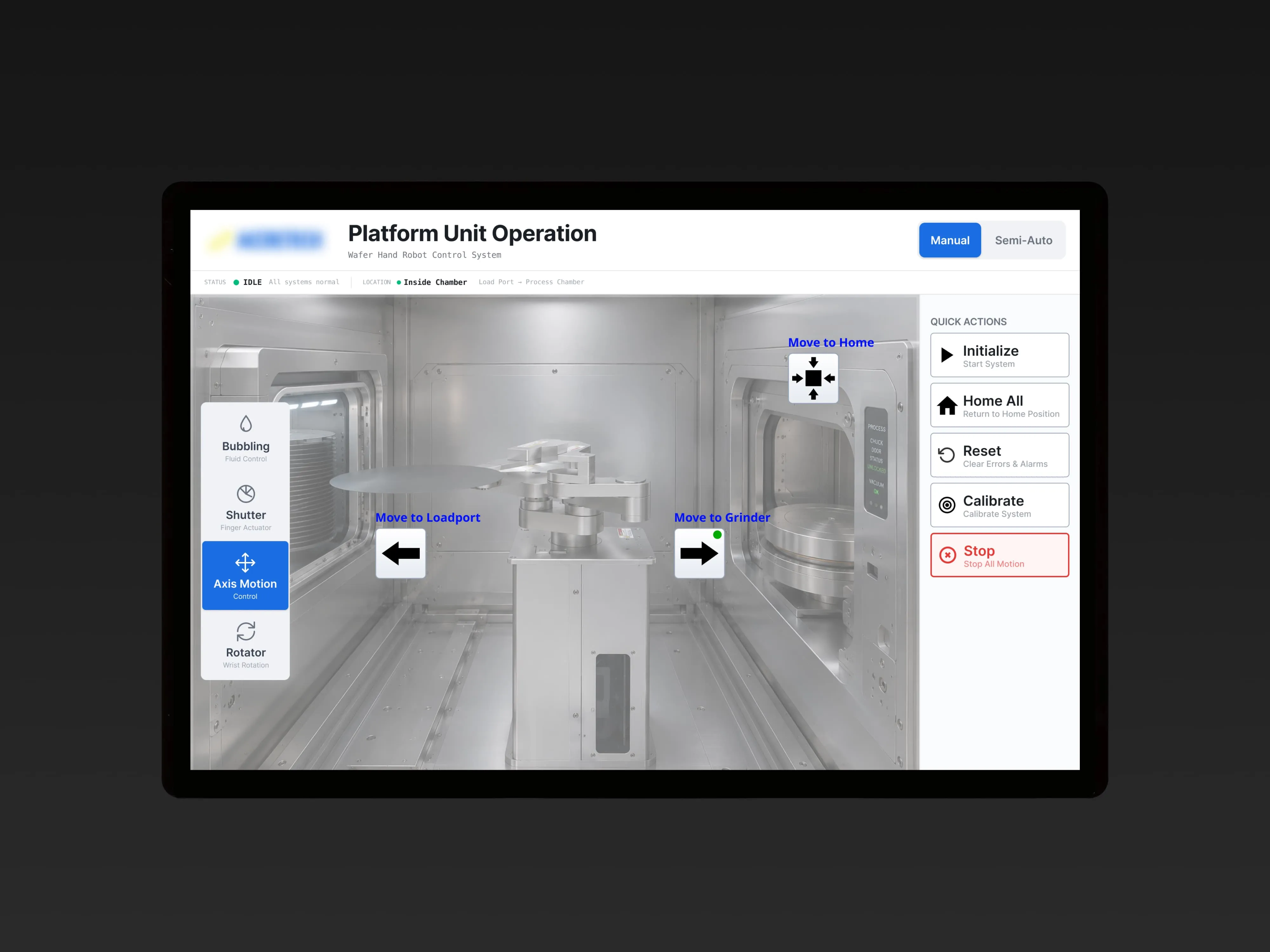
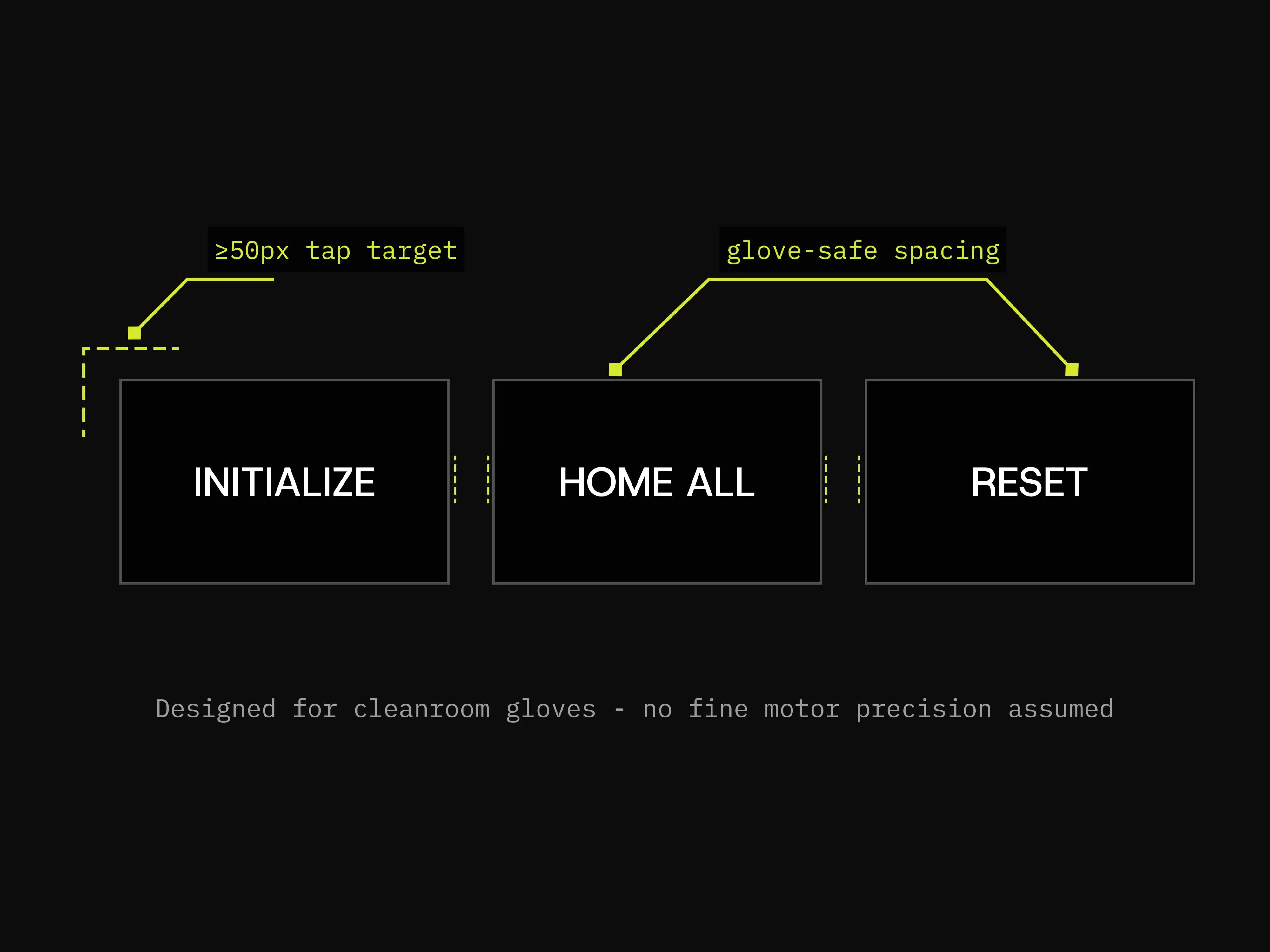
Scaled tap targets beyond 50px and simplified layouts so operators in cleanroom gloves could still hit the right control without hesitation.
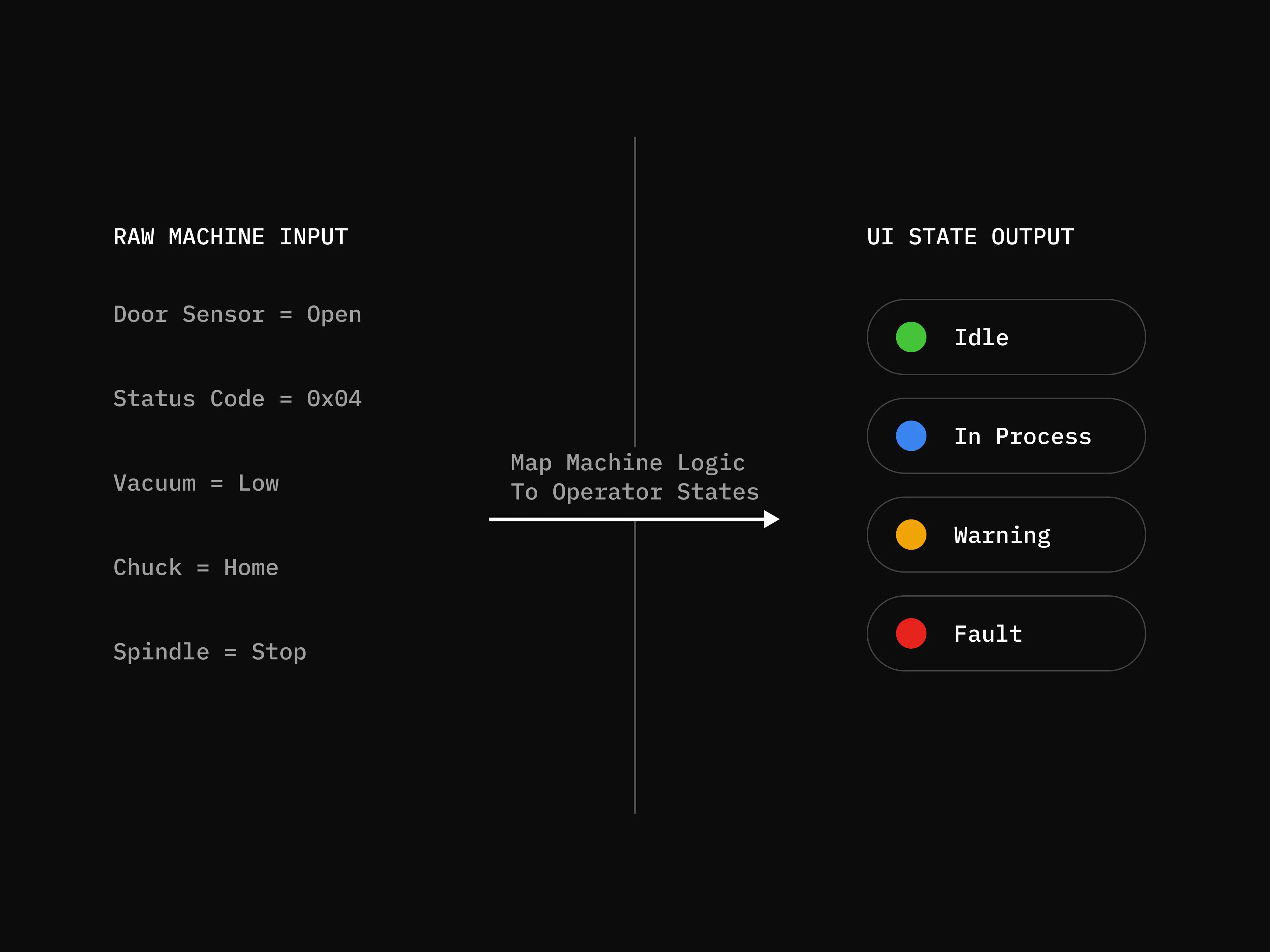
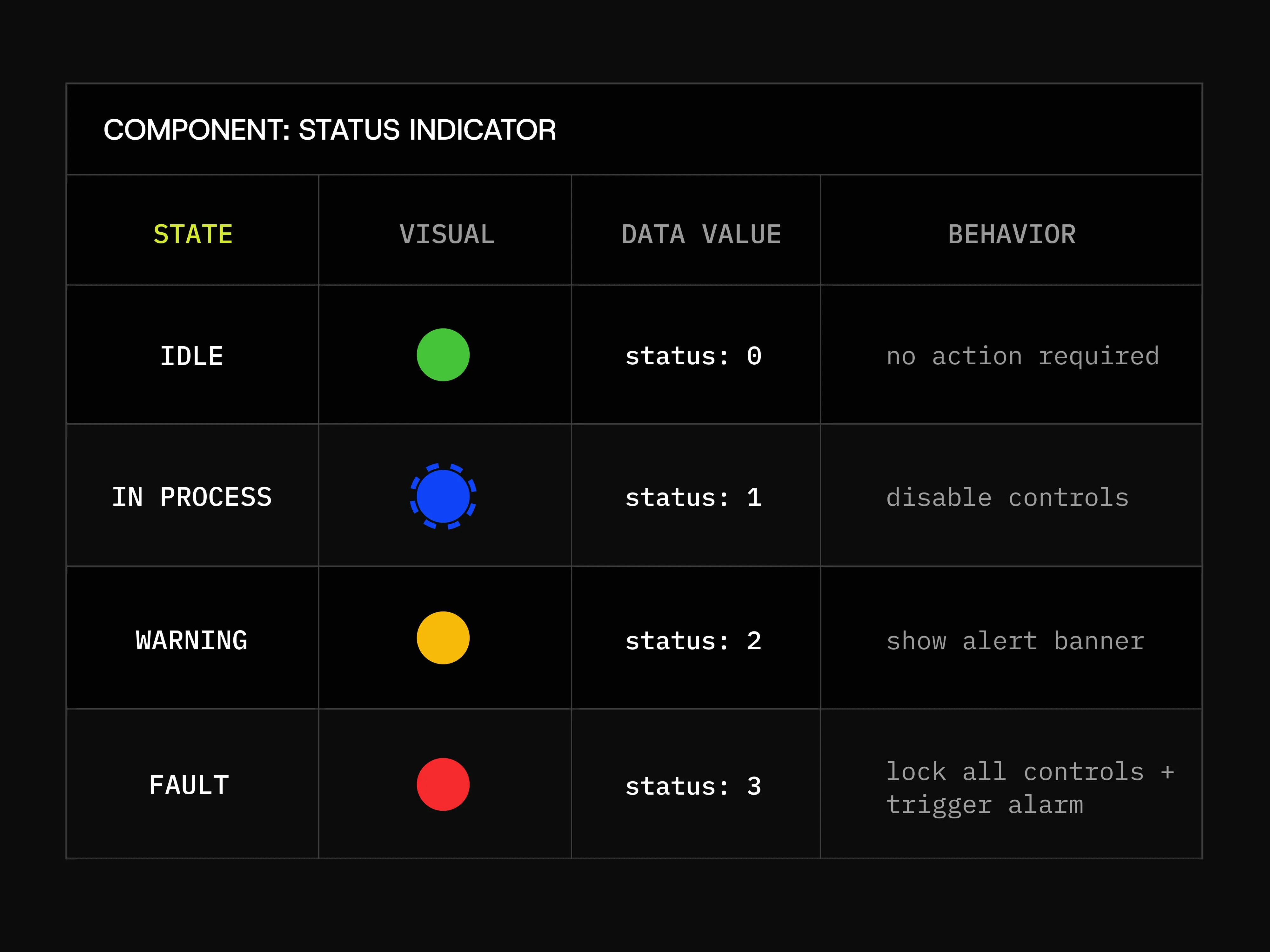
Turned raw hardware codes and sensor signals into human-readable, prioritized alarms. Operators see what’s wrong, how severe it is, and what to do next, instead of just a flashing error code.
Documented clear component states and data expectations so the frontend teams could wire machine logic to UI without guessing how a state should look.
Scaled tap targets beyond 50px and simplified layouts so operators in cleanroom gloves could still hit the right control without hesitation.
Turned raw hardware codes and sensor signals into human-readable, prioritized alarms. Operators see what’s wrong, how severe it is, and what to do next, instead of just a flashing error code.
Documented clear component states and data expectations so the frontend teams could wire machine logic to UI without guessing how a state should look.
[05]Reflection & Lessons Learned_
Precision over creativity: In industrial HMI, "innovative" UI is dangerous. Familiarity and accuracy are the only metrics that matter. The screen must safely reflect the machine's state.
NDA is a design constraint: when you can’t show visuals or talk about the product openly, you’re forced to explain your value through reasoning, structure, and process instead of pixels.
Design as Translation: The true value of a product designer in deep tech isn't drawing interfaces; it's translating years of Confluence specs and strict hardware constraints into operational safety.